Corsica by Ferry: The Scenic Way to Reach the Island
Ferries to Corsica: Routes, Geography and Travel Tips
Located in the western Mediterranean between mainland France and Italy, Corsica is a rugged and beautiful island known for its dramatic coastline, mountain landscapes, and charming seaside towns. Its position makes it easily accessible by ferry, and for many travellers, arriving by sea is one of the most enjoyable ways to begin a trip.
Ferries to Corsica operate from several ports in southern France and northern Italy, offering a range of options for both foot passengers and those travelling with vehicles. Whether you’re planning a road trip, a beach holiday, or an island-hopping adventure, ferry travel provides flexibility and scenic views along the way.
Main Ferry Routes to Corsica
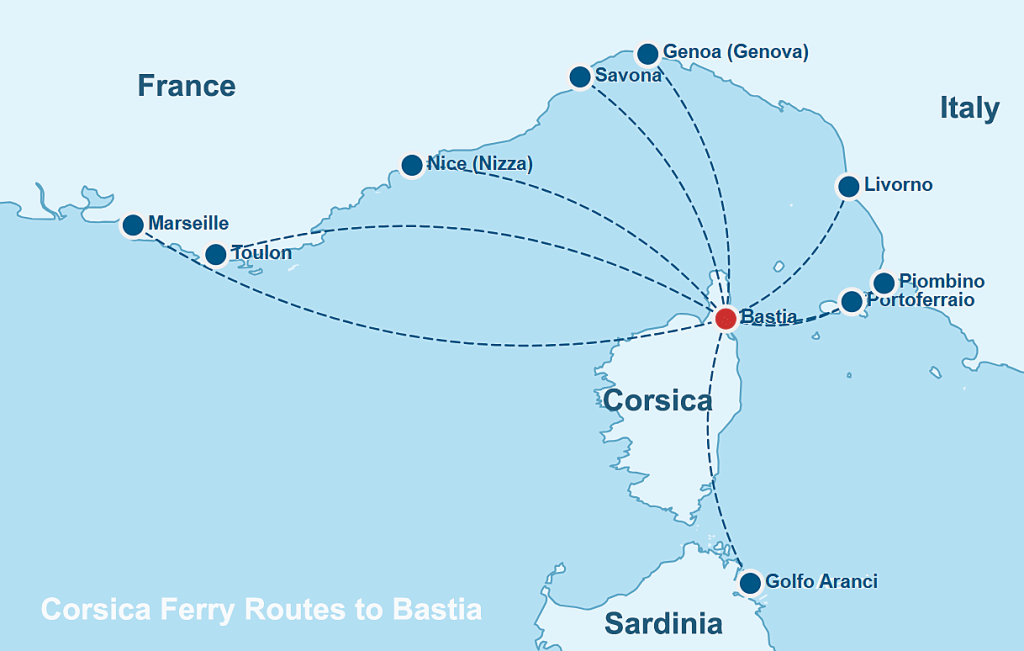
Corsica is well connected to mainland Europe by a network of ferry routes. From France, the main departure ports include Nice, Toulon, and Marseille, with crossings arriving in ports such as Ajaccio, Bastia, and Île-Rousse. These routes operate year-round, with increased frequency during the busy summer months.
From Italy, ferries depart from ports like Livorno, Genoa, and Savona, usually arriving in Bastia, the island’s main northern gateway. One of the shortest and most popular crossings is from Piombino to Bastia, making Corsica especially accessible for travellers already exploring central Italy.
In addition, seasonal ferry routes link Corsica with nearby Mediterranean islands such as Sardinia, allowing for easy island-hopping between the two destinations.
Why Corsica’s Geography Makes Ferry Travel Practical
Looking at a map, Corsica’s location explains why ferry travel is such a popular choice. The island lies closer to Italy than to mainland France, which is why many of the shortest crossings depart from Italian ports. At the same time, strong historical and administrative ties to France mean there are also frequent connections from French ports.
This dual accessibility is one of Corsica’s biggest advantages. Travellers coming from northern Italy can reach the island relatively quickly, while those from southern France have a range of longer but comfortable overnight ferry options. For visitors travelling with cars or motorhomes, ferries are often the most convenient way to reach Corsica, as they allow you to explore the island freely once you arrive.
However, Corsica’s geography also means that some ferry routes can be longer and weather-dependent. Crossings from Marseille or Toulon can take several hours, and sea conditions in the western Mediterranean can occasionally affect schedules. Still, modern ferries are well-equipped, and delays are relatively uncommon during the main travel season.

Choosing the Right Port and Travel Option
Corsica has several key ferry ports, each suited to different travel plans. Bastia is the busiest and most commonly used port, particularly for arrivals from Italy. It is a great starting point for exploring the northern part of the island and the scenic Cap Corse peninsula.
On the west coast, Ajaccio, the island’s capital, offers connections mainly with French ports and provides easy access to central and southern Corsica. Meanwhile, Île-Rousse serves as the gateway to the Balagne region, known for its beaches and hilltop villages.
Choosing the right route often depends on your starting point and travel style. Shorter crossings from Italy are ideal for quick access, while longer overnight ferries from France can save time by combining travel and accommodation into a single journey.
Island-Hopping by Ferry: From Sicily to Corsica via Sardinia
Travelling to Corsica by ferry from Sicily can be turned into a memorable Mediterranean journey rather than a simple transfer. While there is no direct ferry connection between the two islands, it is entirely possible to travel step by step via mainland Italy and Sardinia. A common route begins with a ferry from Sicily to ports such as Naples or Civitavecchia, followed by another crossing to Sardinia, often arriving in Olbia or Porto Torres. From there, a short ferry hop connects Sardinia with southern Corsica, typically between Santa Teresa Gallura and Bonifacio, crossing the narrow Strait of Bonifacio.
Although this journey involves multiple legs, it offers a unique opportunity to explore three very different islands in one trip. It is particularly convenient for travellers with cars or camper vans, as ferries allow flexible movement between destinations without the need for flights. However, planning is essential, as schedules vary seasonally and connections may not always align perfectly. Still, for those who enjoy slow travel and scenic sea routes, this multi-stage ferry journey is one of the most rewarding ways to experience the central Mediterranean.
Overall, Corsica’s ferry network makes the island highly accessible from multiple directions. Whether you’re planning a relaxed holiday or a multi-destination trip across the Mediterranean, travelling to Corsica by ferry offers both convenience and a memorable start to your journey. Start Planning: Explore Our Ferry Routes